
8489
A hybrid that we got from a friend some years ago that is of unknown provenance, to us anyway. It has “the look” of a Steve Correale hybrid but we do not know for sure. This cross was also done by Paul Isley and his cross is named Tillandsia ‘Mr. Mal Mele’, but it is not the same as our plant.
Ours has broad, recurving, silvery leaves and a slightly bulbous base. The leaves blush pinkish on the upper part of the plant at anthesis. The inflorescence is about as tall as the body of the plant overall, with long scape bracts. It bears 6 or more branches that are held upright at a 45-degree angle to the scape. Floral bracts are bright red with some silvery trichomes. Flowers are violet. A very attractive plant with a long-lasting inflorescence.
*Plants are NOT in bud at this time
5902
Unusual for the cross, this same cross; Tillandsia edithae x albertiana, has been made several times in the past and is registered under at least two names. Both however have red flowers, as one might expect with a cross of two red-flowered parents. This one has large purple flowers, silvery pink bracts and nice silvery leaves in a leafy, upright rosette. This plant freely produces many offsets.
197
This Guatemalan plant is a living pincushion. A marble-sized plant, with 2 inch long, needle-fine leaves and a 6 inch tall inflorescence of orange with blue flowers. Easily grown in a breezy spot, mounted. Will form little clusters. This species was commonly known as Til. argentina ‘fine leaf‘ but this name is not valid.
147
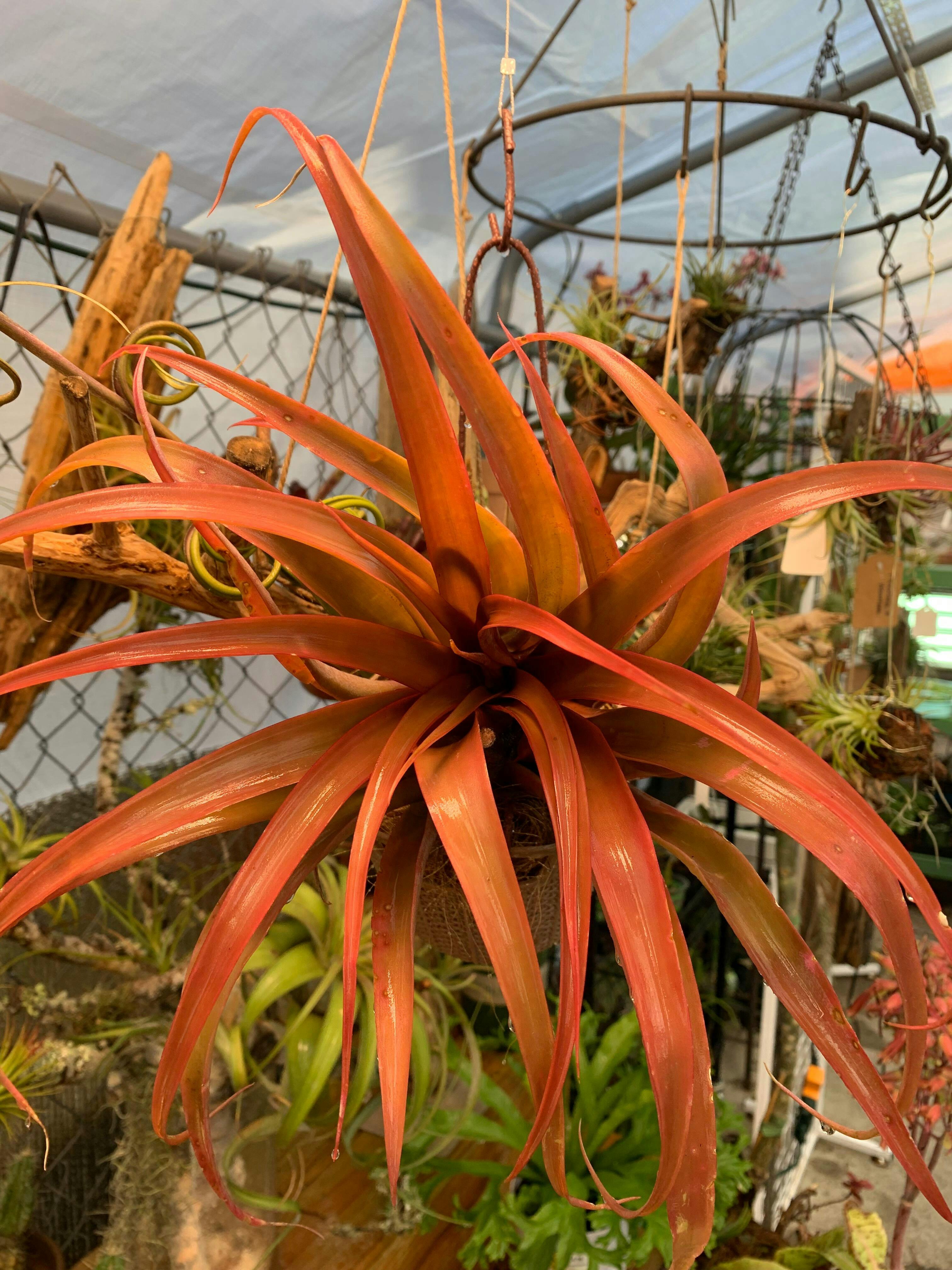
This is a spectacular collector item with a great shape and beautiful color. Widely spreading rosettes of deep-red leathery leaves bear an inflorescence of bright yellow with a capitate head and long scape bracts.
Few Tillandsias are more striking when in bloom. Best in bright light, in a fast draining media. Can be grown mounted or epiphytically, but will not produce as large a plant.
I’ve been searching for this plant since I acquired one a few years ago. After years of searching for the proper ID. As well as another specimen. Finally I found one on your website. I was thrilled to find it available and overjoyed to open the box and hold it in my hands. The Hub did not disappoint. The plant l received is absolutely beautiful. Strong and healthy and perfect and at a great price. Thank you guys so much. Your wonderful plants have brought me so much joy over the years. Thanks so much and a Merry Christmas to all from Texas.
the plant arrived quickly and in great shape.
A Beautiful plant !!
296
A small species with twisted foliage and fragrant light blue flowers. Native of Bolivia and Argentina where it grows in small clusters in the arid scrublands. The leaves are silvery, terete and somewhat kinked. Its inflorescence is like that of a streptocarpa, with light blue fragrant flowers. Grow bright and airy for best results.
Plant arrived safe and healthy!
5284
An attractive hybrid of (ionantha x chiapensis) by John Arden. As with most ionantha hybrids, it shows very strong characteristics of that species. A very leafy open rosette to about 8 or 10 inches tall with a pinkish blush to the scurfy, silvery leaves. The inflorescence is very colorful, a cluster of bright red branches nested deep in the center, with large, tubular, inky-blue flowers. Very pretty and easy to grow. Likes to be on the dry side.
Another great size for the price.
Delighted
207
An interesting Mexican lithophytic species from Oaxaca where it lives in very arid conditions on rock outcrops. The leaves are very stiff, almost needle-like, about 18 inches long. The habit is like that of Till. juncea, but the foliage is much more robust. Related to T. rodrigueziana.
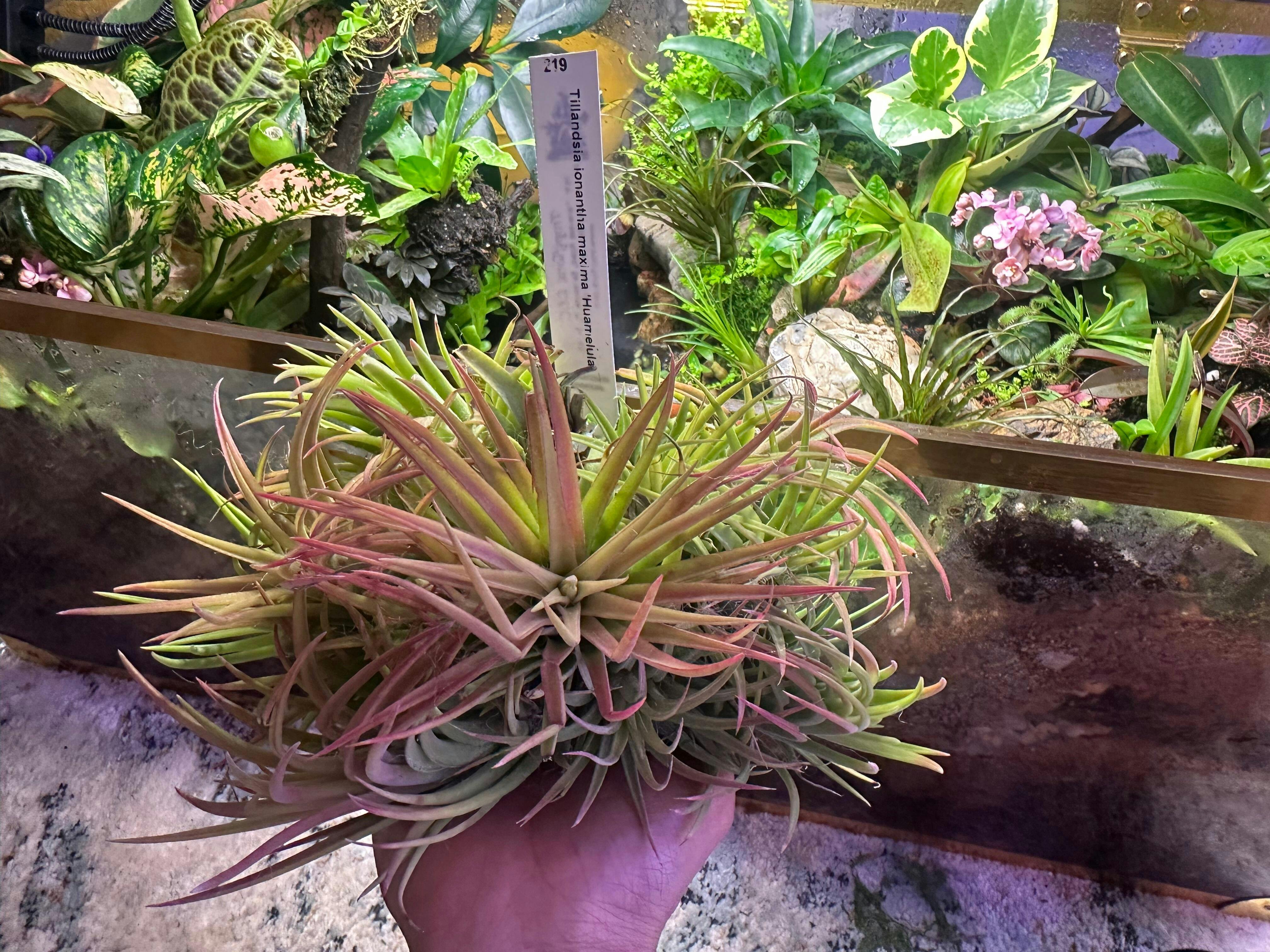
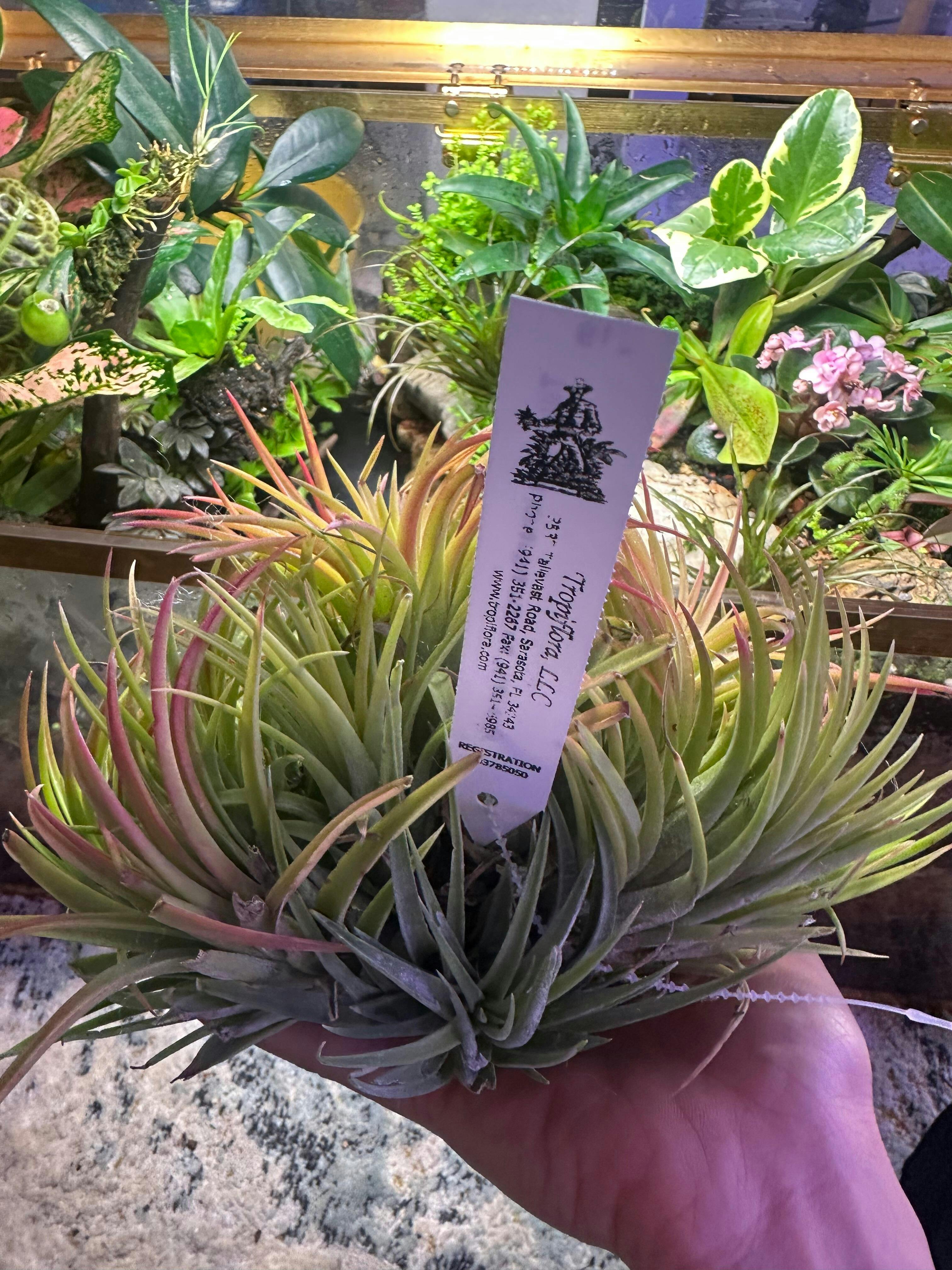
219
Also known as ‘Huamelula‘, is among the largest and loveliest of the various ionantha forms. It occurs naturally on rocky cliffs above a deep seaside canyon in Oaxaca, Mexico. This form grows up to six inches across in a spreading rosette, and colors a magnificent overall red when in bloom. Large, lovely and easy to grow!
208
THIS PLANT IS ON C.I.T.E.S. AND CANNOT BE EXPORTED
A Guatemalan species to about 8 x 10 inches with lovely thick silvery leaves, a bright red, cylindrical, simple spike and purple flowers. Nice for mounting. Considered an endangered species, is rather rare in nature, but very commonly cultivated. Especially easy to grow, a confidence builder for beginners.
I purchased a nice healthy Tillandsia harrisii and 5 other Tillandsia’s from Tropifora. My favorite Bromeliad nursery since 1989!!
125
A tiny fan shaped plant that forms massive clusters. Each individual plant grows to about three inches tall and wide. It is found mainly as a twig epiphyte from Paraguay to Argentina and Bolivia. Our plants are from material that we collected near Mataral, Santa Cruz, Bolivia in 1994. It can often be seen growing in ball-like clusters on power lines. The flowers are tiny but pretty, purple colored, flaring and mildly fragrant. Culture with bright light and ample air circulation. Does great just hanging on a wire or string. Do not allow clumping plants to remain wet for long after watering.
I am a repeat buyer and am never disappointed in the plants received and the careful packaging and shipping always delivered!!!!
3239
An unusual cross of (baileyi x achryostachys) by Patterson. An upright rosette with few leaves, about 12 inches tall. The foliage is narrow, fairly soft and silvery. A simple inflorescence is lanceolate in shape, mostly green but tinted pink.
104
With its clumping habit, brilliant rose bracts and inky blue flowers, this species is a gem of the Tillandsia world. From the ‘southern cone’ of South America, it is tolerant of some cold. Beautiful and undemanding.