

Filter
- Acanthostachys
- Adenia
- Aechmea
- Agave
- Alcantarea
- Alluaudia
- Alocasia
- Aloe
- Amorphophallus
- Ananas
- Androlepis
- Araeococcus
- Billbergia
- Bowiea
- Bromelia
- Bursera
- Book
- Canistrum
- Commiphora
- Cryptanthus
- Cyphostemma
- Dasylirion
- Desmidorchis
- Deuterocohnia
- Dischidia
- Dorstenia
- Hylaeaicum
- Drimiopsis
- Drynaria
- Dyckia
- Encholirium
- Eucharis
- Eucrosia
- Euphorbia
- Fern
- Fernseea
- Ficus
- Fosterella
- Goudaea
- Guzmania
- Haworthia
- Hechtia
- Hippeastrum
- Hohenbergia
- Huernia
- Hydnophytum
- Jatropha
- Kalanchoe
- Ledebouria
- Lymania
- Matelea
- Medinilla
- Monadenium
- Navia
- Neoalsomitra
- Neoglaziovia
- Neoregelia
- Nidularium
- Operculicarya
- Orthophytum
- Pachypodium
- Peperomia
- Pitcairnia
- Platycerium
- Portea
- Pseudorhipsalis
- Puya
- Quesnelia
- Racinaea
- Rhipsalis
- Sansevieria
- Selenicereus
- Senecio
- Stapelia
- Supplies
- Tillandsia
- Trachyandra
- Ursulaea
- Vriesea
- Wittrockia
- X anamea
- X billmea
- X cryptananas
- X cryptmea
- X dyckcohnia
- X enchotia
- X neomea
- X neophytum
- X neotanthus
- X orthotanthus
- X pitcohnia
- X pulirium
- X sedeveria
- X vriecantarea
- X sincoraechmea
- X pitcohnia
- X dyckcohnia
- X portmea
- X pucohnia
- Zamioculcas
- Wholesale tillandsia
- X anagelia
- Acanthostachys
- Adenia
- Aechmea
- Agave
- Alcantarea
- Alluaudia
- Alocasia
- Aloe
- Amorphophallus
- Ananas
- Androlepis
- Araeococcus
- Billbergia
- Bowiea
- Bromelia
- Bursera
- Book
- Canistrum
- Commiphora
- Cryptanthus
- Cyphostemma
- Dasylirion
- Desmidorchis
- Deuterocohnia
- Dischidia
- Dorstenia
- Hylaeaicum
- Drimiopsis
- Drynaria
- Dyckia
- Encholirium
- Eucharis
- Eucrosia
- Euphorbia
- Fern
- Fernseea
- Ficus
- Fosterella
- Goudaea
- Guzmania
- Haworthia
- Hechtia
- Hippeastrum
- Hohenbergia
- Huernia
- Hydnophytum
- Jatropha
- Kalanchoe
- Ledebouria
- Lymania
- Matelea
- Medinilla
- Monadenium
- Navia
- Neoalsomitra
- Neoglaziovia
- Neoregelia
- Nidularium
- Operculicarya
- Orthophytum
- Pachypodium
- Peperomia
- Pitcairnia
- Platycerium
- Portea
- Pseudorhipsalis
- Puya
- Quesnelia
- Racinaea
- Rhipsalis
- Sansevieria
- Selenicereus
- Senecio
- Stapelia
- Supplies
- Tillandsia
- Trachyandra
- Ursulaea
- Vriesea
- Wittrockia
- X anamea
- X billmea
- X cryptananas
- X cryptmea
- X dyckcohnia
- X enchotia
- X neomea
- X neophytum
- X neotanthus
- X orthotanthus
- X pitcohnia
- X pulirium
- X sedeveria
- X vriecantarea
- X sincoraechmea
- X pitcohnia
- X dyckcohnia
- X portmea
- X pucohnia
- Zamioculcas
- Wholesale tillandsia
- X anagelia
4250 products
Tillandsia chiapensis x rothii
8489
Regular price
$35.00
Sale price
$25.00
Save $10.00
No reviews
A hybrid that we got from a friend some years ago that is of unknown provenance, to us anyway. It has “the look” of a Steve Correale hybrid but we do not know for sure. This cross was also done by Paul Isley and his cross is named Tillandsia ‘Mr. Mal Mele’, but it is not the same as our plant.
Ours has broad, recurving, silvery leaves and a slightly bulbous base. The leaves blush pinkish on the upper part of the plant at anthesis. The inflorescence is about as tall as the body of the plant overall, with long scape bracts. It bears 6 or more branches that are held upright at a 45-degree angle to the scape. Floral bracts are bright red with some silvery trichomes. Flowers are violet. A very attractive plant with a long-lasting inflorescence.


Tillandsia compressa
3713
Regular price
$125.00
Save $-125.00
No reviews
This species has been frequently confused with Tillandsia fasciculata. Plants of T. compressa that come from places other than the Caribbean are simply not. There are some forms of fasciculata and certainly others such as jalisco-monticola that have very inflated inflorescences, but they are only similar, not the same. Our plant is a form found in the Dominican Republic, with a large, open rosette shape and a massive inflorescence with several branches, all extremely inflated. The foliage is narrow, silvery gray and the inflorescence a stunning red and yellow with light violet flowers.


Tillandsia concolor
158
Regular price
Sale price
$8.00
Save $-8.00
2 reviews
A Mexican plant with very stiff leaves in an open rosette of 6 to 8 inches. The leaves are yellowish, blushing reddish in strong light or full sun and it produces a shiny red to yellow-green, branched inflorescence with pink flowers. Easy to grow, preferring conditions on the bright and dry side. Can be suspended from a string or mounted on wood, cork, stone or other substrate. Suitable for dry terrarium use.


D
Douglas W. Plant was beautiful and in good condition. considering USPS took a whole week to deliver. I will definitely buy from TropiFlora Again!!
M
Mandy W. I purchased 1 order for myself and 1 for my daughter, both being awesome all-around!!! Thank you!
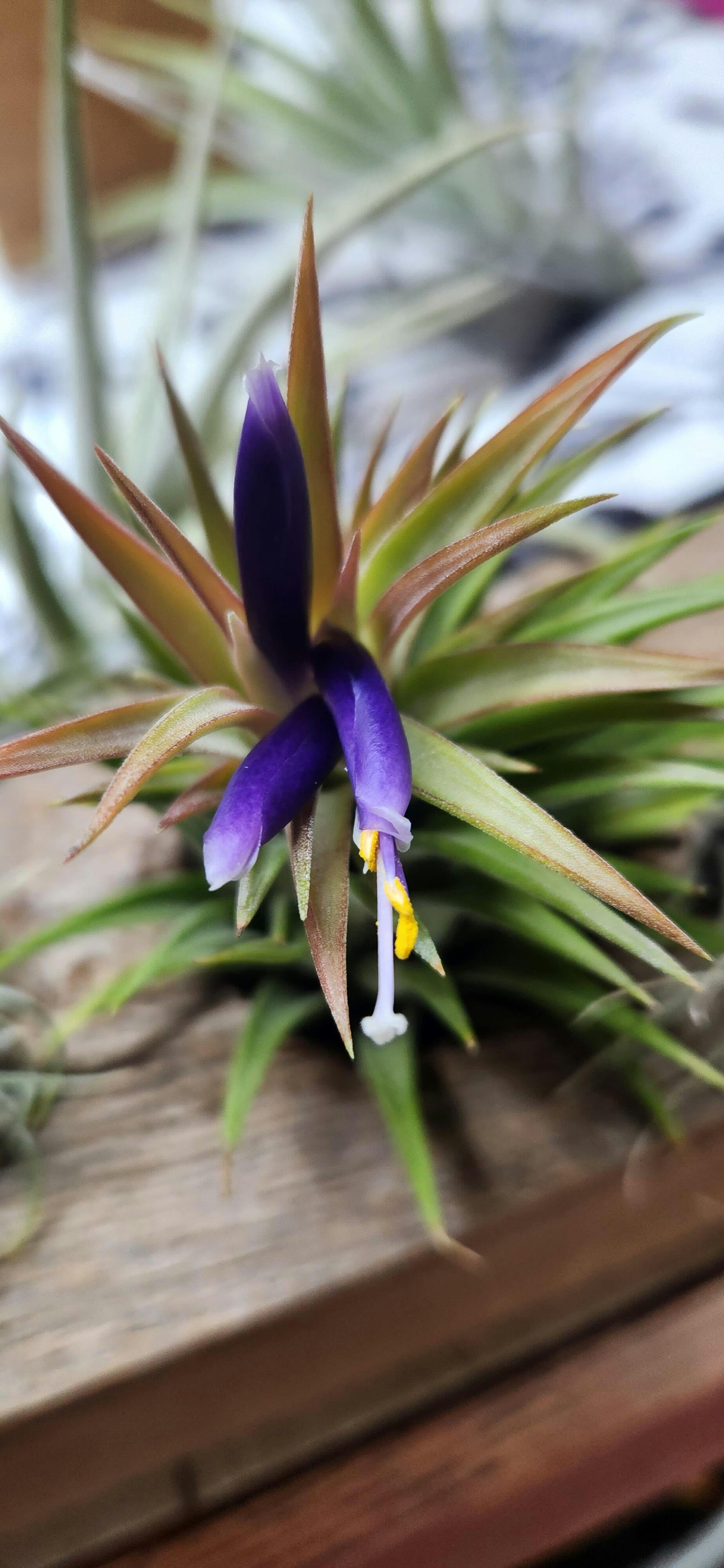
Tillandsia concolor x flabellata
9560
Regular price
$35.00
Save $-35.00
No reviews


Tillandsia concolor ‘Golden Form’
Regular price
$20.00
Save $-20.00
No reviews
A striking form of Tillandsia concolor. This plant does not flush red, but remains golden yellow in color even while blooming. Very pretty.

